Building a brand identity: more than just a logo
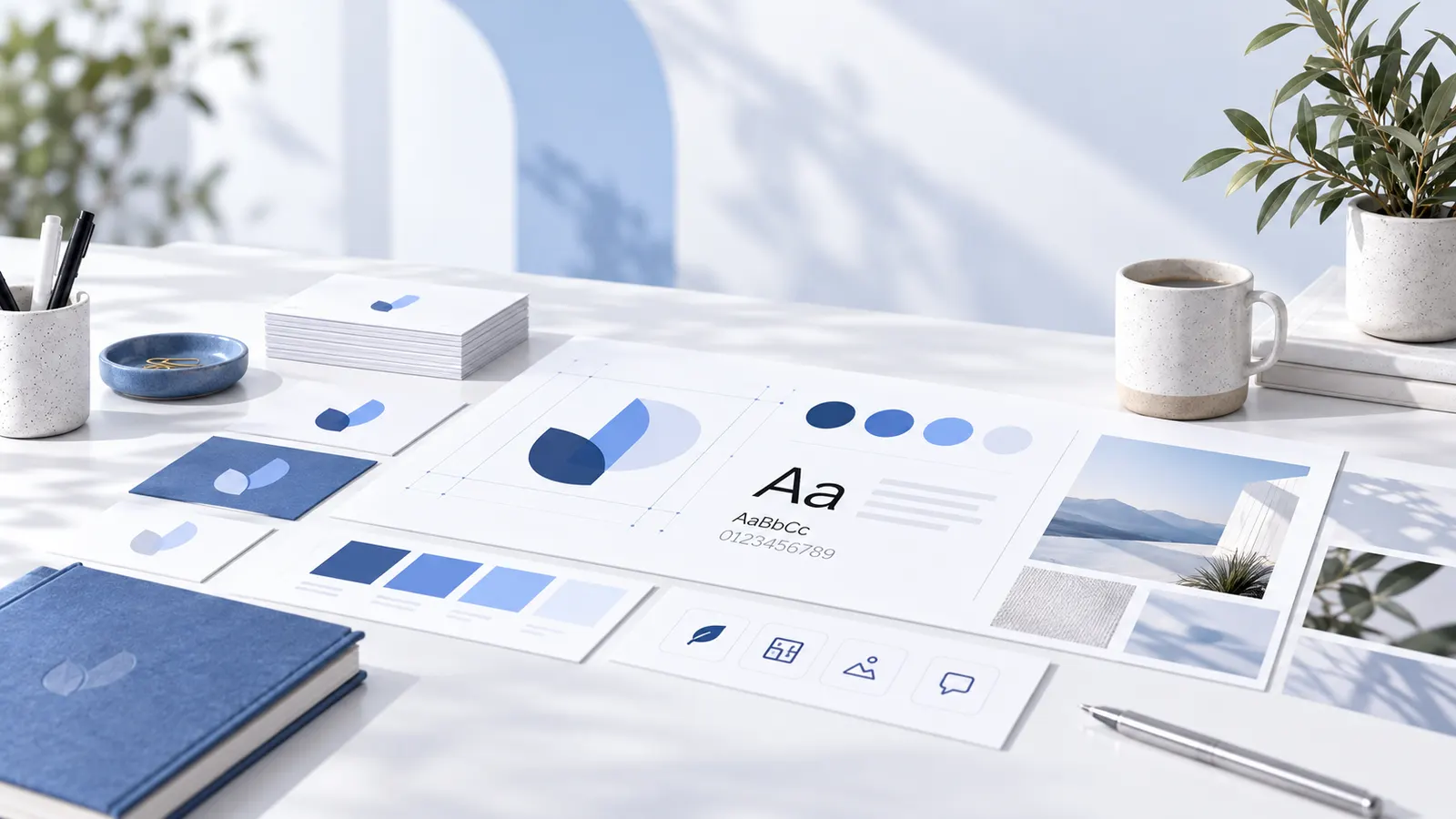
A strong brand is not made of a nice logo alone. It has a recognisable attitude, speaks to particular people and conveys a consistent picture across different touchpoints. This combination is called brand identity.
Small businesses in particular benefit from creating clarity early on: anyone who understands their own brand can align offers, texts and designs better.
Brand identity, corporate identity and corporate design
The terms are often mixed up. Brand identity describes what makes a brand and how it positions itself. Corporate identity covers the identity of the company and how it presents itself. Corporate design is the visual part: for example the logo, colours and typography. In practice the boundaries blur, but the distinction helps with planning. How to build the visual part step by step is explained in Creating your own corporate design.
1. Mission and promise of value
Why does your business exist and what concrete benefit do you offer? A clear answer to this question is worth more than a generic promise such as “best quality”. Phrase it as simply as possible: who is the offer for, and what does it help with?
2. Target group and needs
Think about which people you want to reach. Which questions do they have before buying? What matters to them? Anyone who knows the target group can choose fitting examples, images and wording. You do not have to please everyone.
3. Values and personality
Choose a few qualities that you can actually see in the business. “Uncomplicated” could mean communicating in an understandable way and keeping processes simple. “Precise” can show up in documentation, design and service. Values only seem credible once they become visible.
4. Language and tone
Does your brand sound factual, personal or deliberately bold? Decide how you address people, which terms you prefer and which you want to avoid. A short writing guide helps when several people later write texts.
5. Visual appearance
This is where logo, colours, fonts, shapes, images and layouts come in. They translate your positioning into a recognisable style. What matters is not following every trend, but fitting your offer.
6. A consistent experience
A brand meets people on the website, in emails, on invoices, on social media and possibly in direct conversation. If tone and design diverge strongly, the result feels inconsistent. So check the most important touchpoints together.
A simple brand identity check
Answer these questions in writing: What do we offer? For whom? Why should someone choose us in particular? How do we want to come across? Which colours, fonts and wording express that? How do we make sure it is applied consistently?
Conclusion
A brand identity makes decisions easier. It is not a collection of nice individual parts, but a connection of strategy, language and design. If the visual foundations are recorded centrally, they are easier to reuse in everyday work. In Grafikbuddy you record tone and image style alongside logo, colours and fonts.
Frequently asked questions
Is brand identity the same as a logo?
+
No. The logo is only one visible component.
Does a sole trader need a brand identity?
+
Yes – even a small business benefits from a clear and consistent presence.
Can a brand identity change?
+
Yes. It can evolve along with the offer, the target group and the company.